International SEO checklist: structure, hreflang, language
An international SEO checklist in the order the decisions have to be made: markets, address structure, hreflang, then localisation. With the mistakes to avoid.
Expertise · 02
International SEO is about showing the right version of a page to the right country and language. My current work covers sites across APAC, EMEA and North America, so this is the problem I spend most of my time on as an international SEO consultant.
Who this is for: businesses with sites in more than one country or language, or planning to expand into one.
Country domains, subfolders and subdomains each have trade-offs in cost, authority and upkeep. I choose based on how the business is run, because a structure the team can't maintain will drift.
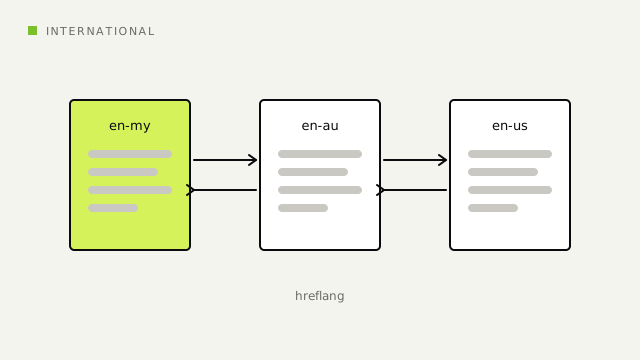
Hreflang tells search engines which page is meant for which language and country. It only works when every version points to every other version and back again. I audit it as a set, because a single missing return link can undo the rest.
English pages for Australia, New Zealand and Malaysia can look like duplicates to a search engine. I separate them with real differences: currency, spelling, local terms, availability and examples.
People in different countries search for the same thing in different words. I research each market's terms separately instead of translating one keyword list.
SEO is the backbone of GEO
AI answers change with the country and language of the person asking. I check how a brand is described in each market, and keep names, facts and structured data consistent across every country version so AI systems treat them as one organisation.
Map every country and language version and what each is meant to rank for.
Check the structure and hreflang as one set, not page by page.
Research each market's own search terms.
Agree shared definitions for reporting, so countries can be compared fairly.
Hreflang is a piece of code that tells search engines which language and country a page is written for, so they can show the right version to each searcher.
Not always. Subfolders on one domain are cheaper to run and share authority. Separate country domains send a stronger local signal but each has to earn its own standing.
You can, with hreflang in place, but pages perform better when they differ in ways that matter locally, such as currency, spelling and examples.
An international SEO checklist in the order the decisions have to be made: markets, address structure, hreflang, then localisation. With the mistakes to avoid.
Send me your website and what you're trying to achieve. I'll look at it myself and reply with what I'd fix first. It's free.