Ecommerce SEO best practices: categories, filters, products
Ecommerce SEO best practices in the order that matters: category pages first, filters under control, product pages that answer the question. With a checklist.
Expertise · 03
Ecommerce SEO is mostly about structure: how categories, products and filters fit together so shoppers and search engines can find what you sell. The principles are the same whether a shop runs on Shopify, WooCommerce or a custom platform, in Malaysia or anywhere else. I learned them building an online pharmacy at DoctorOnCall as its SEO product manager.
Who this is for: online shops of any size whose category and product pages aren't bringing in the searches they should.
Most shopping searches are for a kind of product, not one product. I treat category pages as the main landing pages, with a clear name, a useful introduction and sensible links to subcategories.
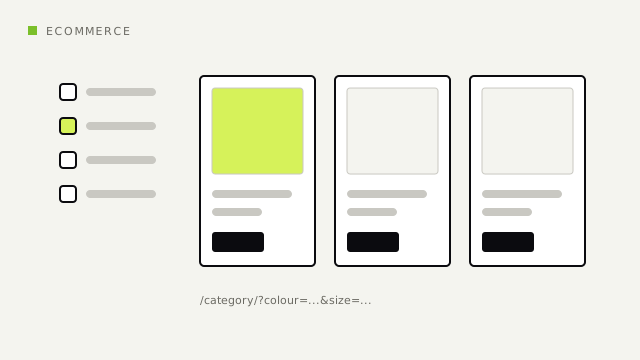
Filters for size, colour and price can create thousands of near-identical addresses. I decide which filtered pages deserve to be indexed and keep the rest out, so crawlers spend their time on pages that matter.
A product page should settle what it is, who it suits, what it costs and whether it's in stock. I also plan for variants and for products that sell out, so their value isn't lost when they go.
Each platform has habits: Shopify SEO has its duplicate product addresses, WooCommerce its plugin sprawl. I work with the platform's limits instead of fighting them.
SEO is the backbone of GEO
AI shopping answers draw on product data. Complete, accurate product schema, with price, availability and reviews, makes a product easier for an AI system to describe and recommend correctly.
Map categories to the searches shoppers make.
Decide which filtered pages are indexed and close off the rest.
Set a product page pattern, including variants and sold-out items.
Complete the product data that search and AI systems read.
Category pages. They match the broad searches most shoppers make, and they pass authority down to the products beneath them.
Either can rank well. Shopify is simpler to keep tidy; WooCommerce gives more control and needs more care. The structure you build matters more than the platform.
Keep the page if the product will return, and say so clearly. If it is gone for good, redirect it to the closest alternative or category.
Ecommerce SEO best practices in the order that matters: category pages first, filters under control, product pages that answer the question. With a checklist.
Send me your website and what you're trying to achieve. I'll look at it myself and reply with what I'd fix first. It's free.